You Won’t Believe These DC Festival Spots — Photo Magic Everywhere
Washington DC isn’t just monuments and museums — during festival season, the city transforms into a vibrant playground for photographers and culture lovers alike. I hit the streets during peak festival month and discovered how light, color, and energy turn familiar landmarks into breathtaking photo ops. From cherry blossom crowds to summer jazz festivals, every corner tells a story. If you're chasing authentic moments and killer shots, DC’s festival scene delivers — and I’ll show you exactly where to go.
The Pulse of DC Festivals: Where Culture Meets the Lens
Washington DC’s festival calendar pulses with rhythm, color, and cultural pride, turning the nation’s capital into a living canvas for visual storytelling. Unlike the quiet dignity of its marble monuments, festival season reveals a different side of the city — one pulsing with music, dance, and communal joy. The National Cherry Blossom Festival in spring marks the beginning of this transformation, drawing over 1.5 million visitors each year. As delicate pink blooms frame the Tidal Basin, the air hums with anticipation, and every glance offers a new composition for the observant photographer.
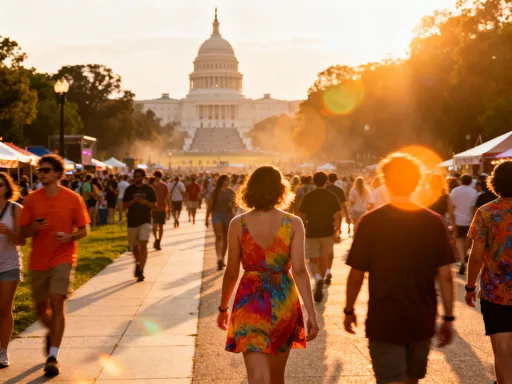
Equally compelling is the Smithsonian Folklife Festival, held annually on the National Mall every Fourth of July week. This free, week-long celebration highlights living cultural traditions from across the United States and around the world. Whether it’s Native American drum circles, Appalachian fiddlers, or Hawaiian hula dancers, the festival creates a rare opportunity to document authentic heritage in motion. The juxtaposition of these vibrant performances against the stately backdrop of the U.S. Capitol or the Washington Monument adds depth and contrast to every image, making for powerful visual narratives.
What sets DC’s festivals apart is their ability to democratize public space. During these events, formal plazas and wide avenues become stages for spontaneous interaction. Children dance barefoot on sun-warmed stone, families picnic beneath flowering trees, and street performers command impromptu audiences. For photographers, this means an abundance of candid moments — laughter caught mid-air, hands raised in rhythm, faces lit by the golden hour. These are not staged scenes, but genuine expressions of shared celebration, and they form the emotional core of any meaningful photo collection.
Timing your visit with a major festival does more than guarantee activity — it unlocks access to special installations, extended hours, and curated experiences not available year-round. Light projections on the Lincoln Memorial, pop-up art gardens near Union Station, or illuminated boat parades along the Potomac are just a few examples of temporary magic. These fleeting moments elevate both the visitor experience and photographic potential. Planning around festival dates ensures not only better lighting and color but also deeper cultural immersion, allowing photographers to move beyond postcard shots and into the heart of the city’s seasonal soul.
Monumental Light: Capturing the National Mall After Dark
As daylight fades over the National Mall, a different kind of energy takes hold — one defined by shadow, glow, and architectural drama. Evening festival events transform the city’s most iconic landmarks into luminous spectacles, offering photographers a rare blend of grandeur and intimacy. The Lincoln Memorial at night, bathed in soft amber light and mirrored perfectly in the still waters of the Reflecting Pool, becomes a masterpiece of symmetry and mood. During special occasions like the Fourth of July fireworks or the National Christmas Tree Lighting, the entire Mall glows with choreographed brilliance, turning the space into a living light installation.
Long-exposure photography thrives in these conditions. With a tripod and a shutter speed of 10 to 30 seconds, photographers can capture streaks of color from fireworks, smooth mirror-like reflections, and the gentle movement of crowds as ghostly silhouettes. The key is patience and positioning. Arriving early — at least an hour before peak illumination — ensures access to prime angles without being blocked by latecomers. The steps leading up to the Lincoln Memorial offer a slightly elevated vantage, while the far end of the Reflecting Pool provides a full-length view of the monument framed by water.
Equipment choices matter in low-light settings. A wide-angle lens (16-35mm) allows for expansive compositions that include both sky and reflection, while a fast aperture (f/2.8 or lower) helps gather more light without increasing ISO noise. Using manual focus is essential, as autofocus often struggles in dim conditions. Setting the white balance to “tungsten” or “incandescent” can correct the warm cast of artificial lighting, preserving the natural tone of the scene. Many photographers also use remote shutters or camera timers to prevent shake during long exposures.
Crowd navigation is another critical consideration. While major events draw large audiences, quieter moments can still be found. After the main fireworks display ends, most visitors disperse quickly, leaving behind a serene, almost sacred atmosphere. Staying behind for just 15 to 20 minutes can yield some of the most powerful images — empty pathways, lingering glimmers on wet pavement, and the quiet dignity of monuments standing guard in the night. These post-event stillnesses offer a counterpoint to the earlier energy, adding emotional range to any photo series.
Cherry Blossoms & Crowds: Finding Stillness in Motion
The National Cherry Blossom Festival is one of the most photographed events in Washington DC, and for good reason. Each spring, approximately 3,000 Yoshino cherry trees bloom in a fleeting display of soft pink and white, drawing photographers from around the world. The Tidal Basin, ringed by blossoms and anchored by the Jefferson Memorial, becomes a magnet for both tourists and professionals. But with popularity comes challenge — how to capture something original in a sea of nearly identical snapshots?
The answer lies in timing and perspective. Sunrise is the golden window. Arriving before 6:30 a.m. during peak bloom ensures softer light, fewer people, and the possibility of morning mist drifting across the water. These atmospheric conditions add depth and mood, transforming a simple blossom shot into a poetic image. Reflections in the still waters of the Tidal Basin double the visual impact, especially when framed tightly to exclude distractions. Using a polarizing filter can enhance contrast between sky and water, deepening blues and reducing glare on wet surfaces.
Yet the Tidal Basin is not the only place to find beauty. Kenilworth Aquatic Gardens, located in Northeast DC, offers a quieter, more intimate alternative. Here, cherry trees grow alongside lotus ponds and wooden boardwalks, creating a painterly setting that feels worlds away from the downtown bustle. The light filters differently through the canopy, and the presence of waterfowl and dragonflies adds life to the frame. Similarly, D.C. United’s annual “Bloom Night” at Audi Field combines soccer, music, and cherry-themed festivities under stadium lights — an unexpected but photogenic blend of sport and celebration.
Creative composition is essential for standing out. Instead of wide landscape shots, try zooming in on details: a single blossom clinging to a wet branch, petals caught mid-fall, or a child’s hand reaching toward a low-hanging bloom. Using a shallow depth of field (f/4 or lower) isolates the subject and blurs the background into soft color fields. Shooting from low angles — even from ground level — can turn tree trunks into leading lines and blossoms into a canopy of light. These techniques help move beyond cliché and into personal expression.
Neighborhood Vibes: Hidden Festival Gems Beyond the Mall
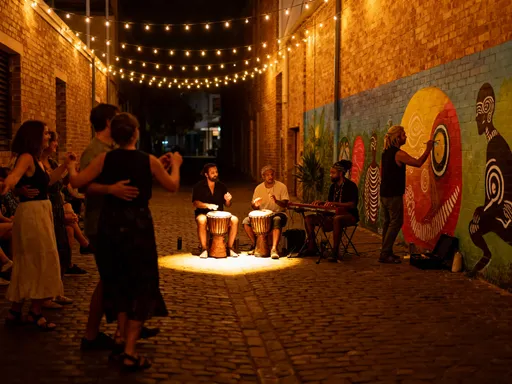
While the National Mall dominates the postcard image of DC, some of the city’s most authentic festival moments unfold in its vibrant neighborhoods. The Adams Morgan Day Festival, held each June, transforms this eclectic district into a street fair alive with color, sound, and flavor. Murals cover brick walls, food trucks line 18th Street, and live bands play on makeshift stages. Unlike downtown events governed by strict regulations, neighborhood festivals embrace spontaneity — perfect for photographers seeking unscripted, emotionally rich moments.
The H Street Festival, another fall favorite, stretches across several blocks in Northeast DC and pulses with Caribbean music, African drumming, and Latin dance. The energy here is raw and joyful, with performers moving through the crowd and children dancing in the street. Because these events are less centrally managed, there are fewer barriers between audience and action, allowing photographers to get close — within respectful distance — to the heart of the celebration. This proximity yields powerful close-ups: a drummer’s focused expression, a dancer’s swirling skirt, or the glint of sunlight on a brass instrument.
These local festivals also offer richer storytelling potential. A single frame might include a vendor selling pupusas beside a graffiti-covered wall, a grandmother watching her granddaughter twirl in a handmade costume, or a group of friends laughing over empanadas. These are not curated moments, but slices of real life — the kind that resonate deeply with viewers. Because many attendees are local residents, there’s a sense of ownership and pride in the festivities, which translates into genuine emotion and connection.
For photographers, practical considerations include transportation and safety. Both Adams Morgan and H Street are accessible via Metro, though parking is limited on festival days. Shooting in the late afternoon offers the best balance of light and activity, while early evening brings streetlights and neon signs into play — ideal for mixed-light compositions. As with any urban event, staying aware of surroundings is important, especially when carrying expensive gear. Using a crossbody camera bag and keeping lenses capped when not in use helps minimize risk without sacrificing mobility.
Festival Fashion & Faces: Capturing Human Stories
No festival is complete without its people, and no photo essay is truly alive without human presence. At events like the Smithsonian Folklife Festival or the National Mariachi Festival, performers wear traditional garments that tell stories of heritage, identity, and artistry. A Pueblo dancer’s intricate headdress, a mariachi musician’s embroidered suit, or a Ukrainian folk singer’s woven sash — these details are not just visually striking but culturally significant. Photographing them with care and respect allows viewers to connect with traditions beyond their own.
Candid photography requires ethical awareness. While public events generally allow for photography, it’s courteous — and often necessary — to ask permission before focusing closely on individuals, especially children or elders. A simple smile and gesture toward your camera can go a long way. Many people are happy to pose when approached kindly, and those posed moments can be just as authentic as candid ones. The key is to avoid exploitation or intrusion; the goal is collaboration, not capture.
Natural light plays a crucial role in portrait photography during festivals. Mid-morning and late afternoon provide soft, diffused illumination that flatters skin tones and enhances texture. Using a prime lens with a wide aperture (such as a 50mm f/1.8) allows for shallow depth of field, blurring busy backgrounds while keeping the subject’s eyes sharp. This technique draws attention to emotion — a wrinkled smile, a focused gaze, a child’s wide-eyed wonder — turning a simple portrait into a window into someone’s experience.
For mobility and discretion, a lightweight mirrorless camera paired with a 24-70mm lens is ideal. This setup offers versatility across distances and lighting conditions without drawing undue attention. Avoiding large flashes or intrusive equipment helps maintain a low profile, allowing photographers to blend into the crowd and observe naturally. Some of the most powerful images come from moments unnoticed — a woman adjusting her granddaughter’s hat, a musician tuning his guitar between sets, or a couple sharing a quiet laugh in a busy plaza.
Golden Hour Magic: Best Spots for Sunset Festival Shots
The hour before sunset — known to photographers as golden hour — transforms Washington DC into a city of warm light, long shadows, and glowing color. During festival season, this magical time coincides with peak activity, creating ideal conditions for dynamic, emotionally resonant photography. One of the best vantage points is the East Front of the U.S. Capitol, where the steps overlook the National Mall. During events like Jazz in the Garden at the U.S. Botanic Garden, the setting sun casts a golden glow across the marble façade, backlighting musicians and silhouetting audience members on the lawn.
Another prime location is The Wharf, a redeveloped waterfront district along the Potomac River. Summer festivals here often include live music, food vendors, and fireworks. As the sun dips below the water, the sky fills with hues of orange, pink, and purple, reflecting off the glass facades of nearby buildings and the rippling surface of the river. Photographers can capture silhouettes of couples walking hand-in-hand along the pier, food vendors illuminated by string lights, or the first bursts of fireworks against a still-bright sky. Using a graduated neutral density filter helps balance exposure between the bright sky and darker foreground.
White balance settings should be adjusted to preserve the warmth of the scene. Setting the camera to “cloudy” or “shade” mode enhances golden tones, while manual Kelvin settings around 5500–6500K offer precise control. Shooting in RAW format allows for greater flexibility in post-processing, especially when recovering highlights or adjusting color temperature. For silhouettes, spot metering on the sky ensures the foreground remains dark and dramatic, while backlighting adds a halo effect around hair and shoulders.
A sample evening shoot might begin at 6:00 p.m. with wide-angle shots of festivalgoers gathering at the Capitol, transition to close-ups of performers tuning instruments at 6:45, and culminate in silhouette compositions during the final 15 minutes of sunlight. By 7:30 p.m., if fireworks are scheduled, switching to manual mode with a 2- to 4-second exposure captures the full arc of each burst. The result is a cohesive visual narrative — not just of an event, but of a day’s emotional arc, from anticipation to celebration.
Plan Like a Pro: Timing, Gear, and Permissions
Success in festival photography begins long before the first shutter click. Research and preparation are just as important as technical skill. The National Park Service (NPS) and official festival websites provide up-to-date schedules, map layouts, and access information. Checking these resources in advance helps avoid surprises like road closures, stage setups, or restricted zones. For example, drone use is strictly prohibited on all NPS property, including the National Mall and Tidal Basin, so photographers should not rely on aerial shots during major events.
The best days to visit are typically weekdays during festival weeks, when crowds are smaller and lighting conditions more predictable. Arriving early — at least 30 to 60 minutes before opening — ensures access to prime positions without competing with late arrivals. Mobile apps like Sun Surveyor or PhotoPills help visualize sun angles, golden hour timing, and blue hour duration, allowing photographers to plan shots with precision. The NPS app also provides real-time updates on park conditions and event changes.
When it comes to gear, simplicity wins. A lightweight mirrorless or DSLR camera, a versatile 24-70mm f/2.8 lens, and a circular polarizer filter cover most shooting scenarios. A compact tripod is useful for long exposures but should be easy to carry and set up quickly. Extra batteries and memory cards are essential, as festival days can last 8 to 10 hours. Wearing comfortable shoes and carrying water is equally important — physical endurance supports creative endurance.
Finally, while planning is crucial, so is openness to the unexpected. Some of the most memorable festival photos happen off-script — a sudden rain shower sending people running under umbrellas, a street performer appearing out of nowhere, or a child blowing bubbles in a shaft of sunlight. These moments cannot be scheduled, but they can be embraced. By balancing preparation with presence, photographers can move beyond documentation and into the realm of storytelling — capturing not just what DC festivals look like, but how they feel.
Festival photography in Washington DC is more than just snapping pretty scenes — it’s about capturing the city’s heartbeat. When culture, color, and celebration collide, even the most familiar landmarks feel new. With the right timing, perspective, and openness to discovery, your lens can tell stories that go beyond postcards. So pack your gear, chase the light, and let DC’s festivals turn your next trip into a visual journey worth remembering.