You Gotta See This—Gaborone’s Cityscape Just Blew My Mind
I never expected Gaborone to hit me like it did. From the moment I checked in, the city unfolded in ways I couldn’t have imagined—sunlit rooftops, quiet streets with bursts of color, and a skyline that blends tradition and modernity. This isn’t just a capital; it’s a living canvas. If you think Botswana is only about safaris, think again. Gaborone’s cityscape is real, raw, and absolutely worth your attention.
First Impressions: Touching Down in Gaborone
Arriving at Sir Seretse Khama International Airport, one is immediately met with a sense of calm efficiency. The terminal, though modest in size, reflects a quiet pride in national identity, with subtle touches of local design—wooden patterns on the walls, signage in both English and Setswana, and soft lighting that mimics the warmth of the surrounding Kalahari sun. As travelers exit into the arrivals hall, the air carries a dry, clean scent, typical of Botswana’s semi-arid climate, and the sky stretches wide and clear, often painted in pale gold even in the late afternoon. The transfer into Gaborone, just over 15 kilometers away, offers the first real glimpse of the city’s unique character: a gradual transition from open savannah to low-rise urban development, where red-tiled roofs peek through acacia trees and paved roads cut cleanly through the dusty landscape.
What strikes most visitors is the absence of urban chaos. There are no towering skyscrapers, no overwhelming traffic jams, and no sensory overload upon entry. Instead, Gaborone reveals itself slowly, like a story unfolding in gentle chapters. The city’s edges blend seamlessly with the natural environment, a deliberate choice that speaks to Botswana’s respect for land and balance. As you approach the central districts, the road straightens, flanked by neatly trimmed shrubs and the occasional sculpture or monument honoring national heritage. This is not a city that announces itself with noise or spectacle, but one that invites quiet observation and thoughtful engagement.
The first view of the city skyline—modest by global standards, yet deeply expressive—sets the tone for the entire visit. Government buildings with clean lines and reflective glass sit alongside traditional market areas with corrugated iron roofs, creating a visual dialogue between past and present. The light here has a distinctive quality, especially in the early hours, casting long shadows and highlighting textures in the architecture. For a capital city, Gaborone feels remarkably grounded, unpretentious, and accessible. It doesn’t try to be what it’s not. And in that authenticity lies its quiet power.
The Heartbeat of the City: Central Business District Up Close
Walking through Gaborone’s Central Business District (CBD) is like stepping into a carefully curated vision of stability and progress. At its core lies the Government Enclave, a cluster of administrative buildings that serve as the political and bureaucratic heart of Botswana. These structures are designed with purpose and restraint—wide walkways, symmetrical layouts, and architectural elements that incorporate traditional Motswana motifs into modern forms. The use of local stone, earth-toned facades, and shaded courtyards reflects a deep consideration for climate and culture. Unlike the glass-and-steel dominance seen in many global capitals, Gaborone’s CBD favors human scale and environmental harmony.
Adjacent to the Enclave, commercial activity pulses with steady rhythm. Low-rise office buildings house banks, legal firms, and telecommunications companies, many flying the national flag proudly above their entrances. Local entrepreneurs operate small shops and service centers, offering everything from photocopying to mobile phone repairs. The streets are orderly, with clearly marked crosswalks and consistent signage, a testament to the country’s strong governance and urban planning principles. Pedestrian flow is calm but consistent, with civil servants, business professionals, and shoppers moving with purpose rather than haste. There is no rush hour frenzy, no honking horns—just a dignified pace that mirrors the nation’s broader ethos of patience and deliberation.
What makes the CBD particularly compelling is how it embodies Botswana’s post-independence journey. Since gaining independence in 1966, the country has prioritized education, infrastructure, and economic diversification, and the cityscape reflects those choices. The absence of haphazard construction or overcrowded informal settlements speaks to effective land-use policies and long-term planning. While some may expect a more dynamic or bustling financial center, Gaborone’s CBD offers something different: a sense of order, safety, and intentionality that is rare in rapidly urbanizing regions. It’s not flashy, but it is functional, inclusive, and deeply reflective of national values.
Elevated Views: Where to See Gaborone from Above
To truly appreciate Gaborone’s layout and character, one must rise above it. The city may appear flat and unassuming at street level, but from elevated vantage points, its structure reveals a surprising complexity. Among the most rewarding viewpoints is the summit of Kgale Hill, an ancient volcanic formation that rises nearly 1,400 meters above sea level. The hike to the top—moderate in difficulty, taking about 45 minutes—passes through rocky terrain and patches of indigenous vegetation, offering glimpses of lizards, birds, and resilient desert plants along the way. Reaching the summit rewards visitors with a panoramic vista that stretches across the city, the surrounding hills, and into the distant haze of the Kalahari.
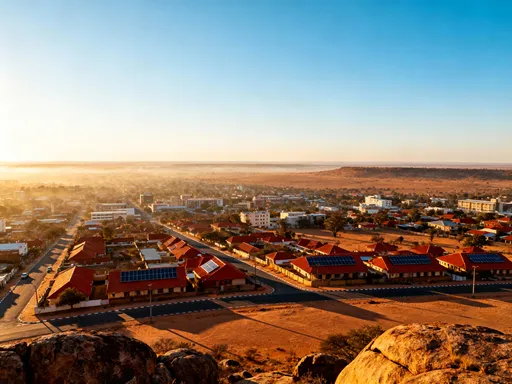
From this height, Gaborone unfolds like a patchwork quilt—residential neighborhoods stitched together with green belts, major roads forming neat arteries, and clusters of development radiating outward from the center. The contrast between the city’s built environment and the natural landscape is striking. Red-tiled roofs glow under the sun, solar panels glint on institutional buildings, and tree-lined avenues create pockets of shade in an otherwise open terrain. On clear days, the silhouette of the Notwane River can be seen winding through the southern edge of the city, a quiet reminder of the water sources that sustain urban life in an arid region.
Sunset from Kgale Hill is especially memorable. As the sun dips below the horizon, the sky shifts through shades of amber, rose, and deep violet, casting a golden hue over the entire city. Streetlights begin to flicker on, and the first stars appear above the hills. This moment captures the essence of Gaborone—not as a place of constant motion, but as a space of quiet transition, where day gently yields to night. Other elevated spots, such as the viewing platform near the University of Botswana or the upper levels of certain hotels, offer similar perspectives, each revealing a different facet of the city’s topography and rhythm.
Street-Level Soul: Neighborhoods That Define the Cityscape
Beyond the formal structures of government and commerce, Gaborone’s true personality emerges in its neighborhoods. Areas like Fairgrounds, New CBD, and Broadhurst are where daily life plays out in full color and sound. These districts are not tourist showcases, but living, breathing communities where families shop, children walk to school, and neighbors greet each other by name. The architecture here is a mix of planned housing, self-built homes, and small commercial strips, reflecting both economic diversity and cultural continuity.
In Fairgrounds, home to the annual Botswana Trade Fair, the streets come alive during events with food stalls, music, and crowds in traditional attire. Even on ordinary days, the area buzzes with activity—vendors sell fresh produce from wooden carts, tailors work behind sewing machines in open-air shops, and barbershops double as informal community hubs. Murals painted on building walls add splashes of color and storytelling, often depicting national heroes, wildlife, or proverbs in Setswana. These artistic expressions are not curated for tourists; they are organic, community-driven statements that give the city visual depth and emotional resonance.
New CBD, though bearing a modern name, is rooted in everyday practicality. It hosts a mix of residential flats, schools, and small businesses, creating a walkable urban environment where errands and socializing happen in close proximity. Broadhurst, one of the oldest suburbs, offers a glimpse into Gaborone’s growth over decades. Here, older homes with spacious yards sit beside newer apartment complexes, and community centers host everything from youth programs to senior gatherings. The rhythm of life in these neighborhoods is steady and grounded, shaped by family, faith, and shared history. It is in these streets that the city’s soul is most clearly felt—not in grand monuments, but in the simple act of people going about their lives with dignity and warmth.
Green Breaks in the Urban Frame: Parks and Open Spaces
Amidst the concrete and tarmac, Gaborone carves out spaces for nature and reflection. Public parks and green zones play a vital role in the city’s design, offering residents places to relax, exercise, and connect with the environment. Among the most significant is Riverside Park, a linear green space that follows the course of the Notwane River. Though the river often runs dry, the park remains a vibrant hub for morning joggers, families on weekends, and birdwatchers drawn to the acacia trees and reed beds that support local wildlife. Benches, walking paths, and shaded picnic areas make it a welcoming retreat from the urban pace.
Another key landmark is the Three Dikgosi Monument, a striking bronze sculpture honoring the three chiefs who played pivotal roles in Botswana’s journey to independence. Located in a spacious plaza surrounded by grass and low shrubs, the monument serves both as a historical tribute and a gathering place. Locals often pause here during walks, and school groups visit to learn about national heritage. The open design encourages contemplation and conversation, reinforcing the idea that public spaces are not just decorative, but essential to civic life.
What stands out in Gaborone’s approach to landscaping is its sensitivity to climate. Rather than importing water-intensive lawns or exotic plants, the city favors drought-resistant species—succulents, aloes, and native grasses—that thrive in the dry conditions. This practical yet beautiful approach reflects a broader philosophy of sustainability and adaptation. These green spaces are not just aesthetic additions; they are functional lungs for the city, helping to regulate temperature, reduce dust, and support biodiversity. For visitors, they offer moments of peace and connection, reminding us that even in urban settings, nature need not be an afterthought.
Nightfall in the Capital: How the City Transforms After Dark
As the sun sets, Gaborone undergoes a subtle but meaningful transformation. The intense daylight gives way to a softer, more intimate atmosphere. Street lighting, though not extensive, is sufficient to guide movement, and the glow from homes, shops, and restaurants creates a warm, inviting ambiance. Unlike cities that never sleep, Gaborone embraces a quieter rhythm after dark. By 9 p.m., many streets are nearly empty, and the sounds of traffic fade into the occasional bark of a dog or rustle of wind through trees.
This peacefulness is not a sign of stagnation, but of safety and balance. Crime rates in Gaborone are relatively low compared to other African capitals, and residents feel comfortable walking in their neighborhoods at night. Families gather on verandas, friends meet for tea at 24-hour convenience stores, and night watchmen stand quietly outside office buildings. The limited nightlife—concentrated in a few restaurants, lounges, and hotel bars—adds to the city’s understated charm. There are no loud clubs or all-night parties, but rather small, intimate venues where conversation flows easily and music is kept at a respectful volume.
The night sky, unobscured by excessive light pollution, often reveals a breathtaking canopy of stars—a rare luxury in today’s urban world. This celestial view serves as a quiet reminder of Botswana’s vast, open spaces and its connection to the natural world. For travelers accustomed to cities that never dim their lights, Gaborone’s nighttime calm can be both surprising and deeply restorative. It offers a chance to slow down, reflect, and appreciate the beauty of stillness—a quality increasingly rare in the modern age.
Why Gaborone’s Cityscape Matters—And Who Should Experience It
Gaborone challenges the common narrative about African cities. It does not conform to stereotypes of overcrowding, disorder, or underdevelopment. Instead, it presents a model of thoughtful urban growth—measured, inclusive, and deeply rooted in cultural identity. Its cityscape tells a story of a nation that has chosen stability over spectacle, sustainability over speed, and community over consumerism. For travelers seeking authenticity, this capital offers a rare opportunity to witness urban life as it is lived by real people, not staged for cameras.
The city holds particular appeal for women aged 30 to 55 who value safety, meaningful experiences, and cultural insight. Whether traveling solo or with family, they will find Gaborone welcoming and unintimidating. The ease of navigation, the warmth of local interactions, and the absence of aggressive tourism make it an ideal destination for those who prefer substance over sensation. It is a place where one can walk freely, engage with locals, and absorb the rhythm of daily life without feeling like an outsider.
Gaborone may not have the fame of Cape Town or the scale of Nairobi, but it possesses a quiet dignity that lingers long after departure. It does not dazzle—it reveals. It does not shout—it listens. And in that quietude lies its strength. For those willing to look beyond the obvious, Gaborone offers a profound reminder that beauty exists not only in grandeur, but in the simple, steady pulse of a city that knows who it is. This is not a destination for thrill-seekers, but for soul-seekers. And in a world that moves too fast, that may be exactly what we need.