Lost in White Curves: Santorini’s Architecture Stole My Breath
Wandering through Santorini feels like stepping into a dream painted in white and blue. The island’s iconic architecture—cascading cliffside homes, arched doorways, and domed churches—is more than just picturesque; it’s a response to centuries of sun, wind, and volcanic terrain. Every alley whispers stories of resilience and beauty, blending form and function in ways I never expected. This is not just sightseeing—it’s soul-stirring. Santorini’s buildings do not merely occupy space; they emerge from it, shaped by nature and refined by time. To walk its streets is to witness how human ingenuity can turn harsh conditions into harmony, where every curve and corner serves both purpose and poetry.
First Glimpse: Arrival in Fira and the Instant Architectural Wow
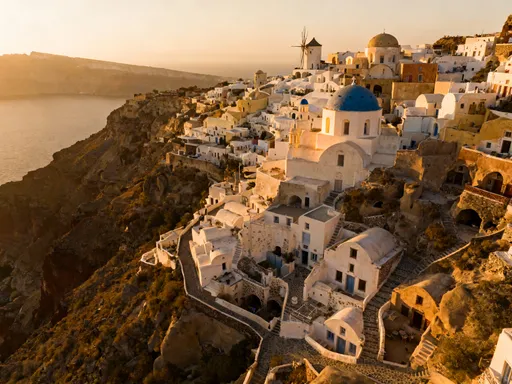
As the ferry glides into the caldera, the first sight of Fira unfolds like a revelation. Perched high above the deep blue waters, the town clings to the edge of a volcanic cliff, its buildings stacked like layers of bleached coral. The verticality is astonishing—homes, hotels, and shops rise straight from the rock face, connected by switchback paths and staircases that defy gravity. There is no gradual ascent here; the island announces itself in dramatic elevation, drawing the eye upward and outward across the Aegean Sea. This is architecture born of necessity, yet elevated to art.
The materials used are as striking as the views. Volcanic stone, dark and porous, forms the base of many structures, grounding the whitewashed upper levels in earthy contrast. The plastered walls, painted in brilliant white, reflect the intense Mediterranean sun, reducing heat absorption while glowing under daylight. It is a practical choice transformed into an aesthetic signature. The domes of churches, painted in deep cobalt, stand out like sapphires against the sky, their color echoing the sea below. Together, these elements create a visual rhythm—white, blue, rock, sky—that feels both spontaneous and perfectly composed.
What strikes visitors most is how seamlessly the town integrates with the landscape. Unlike cities built to dominate nature, Fira appears to grow from it. Buildings are not placed on the cliff—they are carved into it, shaped around its contours, embracing its steepness rather than resisting it. Balconies jut out over the void, offering panoramic views that make the heart race. At sunset, when golden light washes over the facades, the entire town seems to shimmer, as if lit from within. This is not just architecture; it is alchemy, turning stone and sun into something transcendent.
The Logic Behind the Beauty: How Climate Shaped Design
Beneath Santorini’s postcard-perfect surface lies a deep logic forged by climate and survival. The island’s architecture is not a stylistic accident but a centuries-old response to environmental demands. Scorching summer temperatures, relentless winds, and limited fresh water shaped a building tradition that prioritizes comfort, durability, and efficiency. Every design element—from wall thickness to window placement—serves a functional purpose, proving that true beauty arises when form follows function.
Thick walls, often made of volcanic tuff or stone masonry, provide natural insulation. They absorb heat during the day and release it slowly at night, maintaining a stable indoor temperature without modern cooling systems. In summer, interiors remain cool and refreshing, sometimes up to ten degrees Celsius cooler than outside. Small, strategically placed windows minimize direct sunlight while allowing cross-ventilation, capturing sea breezes that flow through narrow alleys and open courtyards. These passive cooling techniques, developed long before air conditioning, demonstrate a profound understanding of the local environment.
Curved walls and rounded corners are not merely decorative; they help deflect the strong Meltemi winds that sweep across the island from the north. Flat roofs, once used for drying crops and collecting rainwater, now serve as terraces and outdoor living spaces, maximizing usable area in a landscape where horizontal space is scarce. Even the orientation of homes is deliberate—facing south or southeast to capture morning light and afternoon shade, optimizing comfort throughout the day.
What makes this architectural response so remarkable is how it evolved into elegance. The constraints of climate did not limit creativity; they refined it. A necessity became a signature. The island’s aesthetic—minimalist, clean, harmonious—is not a trend but a legacy of adaptation. Visitors may come for the views, but they stay for the feeling of being in a place where every detail has meaning, where comfort and beauty coexist without compromise.
Cave Houses: Living Within the Volcano’s Edge
Among Santorini’s most distinctive dwellings are the traditional cave houses, known locally as yposkafa spita. Carved directly into the soft volcanic rock of the caldera, these homes were originally built by farmers and sailors seeking shelter from the elements. Their construction required no bricks or timber—only skill, time, and an understanding of the land. Over generations, these humble shelters have evolved into sought-after residences and luxury accommodations, yet they retain the essence of their origins: cool interiors, organic shapes, and a deep connection to the earth.
The thermal properties of cave houses are extraordinary. The surrounding rock acts as a natural insulator, maintaining a nearly constant temperature year-round. Even in peak summer, when outside temperatures soar above 35°C, the interior remains comfortably cool, often requiring no additional cooling. In winter, the same mass retains warmth, creating a cozy refuge from cooler weather. This energy efficiency, achieved without technology, is a testament to the wisdom embedded in traditional building practices.
Inside, the spaces flow organically, with rounded walls and arched doorways creating a sense of intimacy and fluidity. Natural light filters through carefully placed skylights or courtyard openings, casting soft shadows that shift with the sun. Some modern renovations have introduced glass walls and minimalist furnishings, blending old and new in ways that honor the past while embracing contemporary comfort. Private terraces are carved into the cliffside, offering unobstructed views of the caldera and the distant sea.
Today, many cave houses operate as boutique hotels or vacation rentals, allowing travelers to experience life within the rock. Staying in one is not just about luxury—it’s about immersion. The silence is profound, broken only by the distant echo of waves or the rustle of wind. The acoustics are unique, with sound carrying softly through curved chambers. To sleep in a cave house is to feel the island’s pulse, to rest within its very bones. It is architecture not as shelter, but as sanctuary.
Domed Churches: Symbols of Faith and Form
Scattered across Santorini’s villages, the island’s blue-domed churches are among its most photographed features. Their elegant curves and vivid hues punctuate the landscape, serving both spiritual and aesthetic roles. While they may appear uniform in postcards, each church has its own history, architectural nuance, and place within the community. Rooted in Byzantine tradition, these structures reflect a deep cultural and religious heritage, their design shaped as much by faith as by function.
The dome itself is a powerful symbol in Eastern Orthodox architecture, representing the heavens and the divine presence. In Santorini, the domes are typically hemispherical, painted in deep blue to mirror the sky and sea—a visual echo of the island’s natural surroundings. The contrast with white-washed walls reinforces purity and light, central themes in Christian iconography. Small bell towers, often attached or nearby, add vertical emphasis without disrupting the harmony of the form.
Location is intentional. Churches are placed at village entrances, on hilltops, or overlooking harbors, marking both sacred and scenic vantage points. In Oia, the famous Three Bells of Saint Spyridon stand at the edge of the cliff, their domes framing the sunset in a way that draws thousands each evening. Yet beyond the spectacle, these churches remain active places of worship, hosting weddings, feast days, and weekly services that anchor community life.
Their structural simplicity contributes to their endurance. Built with local materials and traditional techniques, many have withstood earthquakes and centuries of weathering. Restoration efforts prioritize authenticity, using lime-based plasters and hand-painted details to preserve their character. More than landmarks, these churches are living monuments—symbols of continuity, resilience, and the quiet dignity of faith expressed through form.
Hidden Alleys of Oia: Where Architecture Creates Intimacy
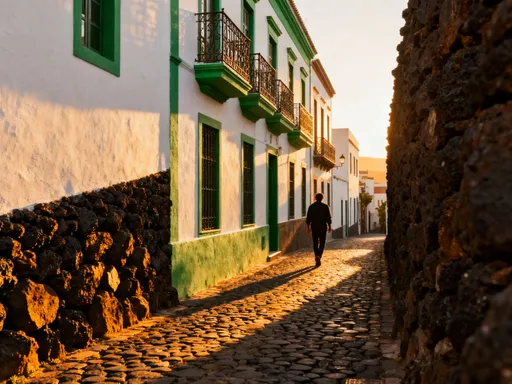
Oia is often celebrated for its sunsets, but its true magic lies in its labyrinthine alleys. Winding through the village is like moving through a three-dimensional poem—each turn reveals a new image, a different play of light, a hidden courtyard or sudden vista. The architecture here is not just seen; it is experienced spatially, guiding movement, shaping perception, and creating moments of quiet discovery.
The narrow streets were designed with purpose. In a place with little shade and strong sun, tight passageways reduce exposure and maintain cooler microclimates. Overhanging balconies and arched walkways provide natural cover, while stepped pathways follow the natural slope of the land, minimizing the need for extensive excavation. Staircases, often built from local stone, double as seating, inviting pause and conversation. Rooftops become terraces, and walls serve as supports for climbing bougainvillea, adding bursts of color to the monochrome palette.
Space is used with remarkable efficiency. Small courtyards, enclosed by high walls, offer privacy and shelter from the wind. Doorways are modest, sometimes unmarked, hinting at the domestic life within. Shops and galleries are tucked into former storage rooms or stables, their interiors cool and intimate. The rhythm of walking through Oia is slow and deliberate—there is no rush, only the pleasure of unfolding beauty.
This architectural intimacy fosters a sense of connection. Strangers nod as they pass; couples pause to take photos; elders sit in doorways, watching the world go by. The design does not isolate; it encourages interaction, even in a tourist-heavy environment. In Oia, architecture does not merely define space—it shapes experience, turning a simple walk into a journey of quiet wonder.
Beyond the Postcard: Lesser-Known Villages with Unique Flair
While Fira and Oia dominate travel brochures, Santorini’s inland villages offer a quieter, more grounded perspective on island life. Pyrgos, Megalochori, and Emporio preserve architectural traditions that predate the caldera-edge boom, showcasing earth-toned homes, enclosed courtyards, and a more rustic charm. Here, the color palette shifts from white and blue to ochre, gray, and terracotta, reflecting the natural hues of the land. These villages reveal a different side of Santorini—one rooted in agriculture, community, and continuity.
Pyrgos, once the island’s capital, sits atop a hill with panoramic views. Its maze-like streets climb toward a medieval castle ruin, and its homes feature thick stone walls and shaded verandas. Courtyards are central to family life, used for dining, gardening, and gathering. Unlike the cliffside towns, where space is vertical, Pyrgos spreads horizontally, allowing for larger plots and more private outdoor areas. The pace is slower, the air fresher, and the sense of history more tangible.
Megalochori, meaning “large village,” retains a strong sense of local identity. Traditional houses with arched entrances and wooden shutters line quiet streets. Many have been carefully restored, preserving original features like stone fireplaces and vaulted ceilings. The village church, Agios Nikolaos, stands in the central square, its bell tower a familiar landmark. Life here revolves around family, faith, and the land—grapevines and tomato fields still surround the town, linking it to its agricultural roots.
These villages offer travelers a chance to see Santorini beyond the spectacle. There are no crowds jostling for sunset photos, no souvenir shops on every corner. Instead, there is authenticity—people tending gardens, children playing in alleys, neighbors sharing coffee. The architecture reflects this rhythm: practical, enduring, and deeply human. To visit these places is to understand that Santorini is not just a destination for tourists, but a home for generations.
Staying in Style: How Design Enhances the Travel Experience
Accommodations in Santorini go beyond comfort—they are integral to the experience. Many boutique hotels and guesthouses are designed as architectural extensions of the island, blending traditional elements with contemporary luxury. Cave suites with private terraces, infinity pools that merge with the horizon, and minimalist interiors with natural materials create spaces that feel both indulgent and authentic. The best designs do not compete with the view; they frame it, enhance it, and invite deep connection.
Staying in a cave-style suite, for example, offers more than novelty. The coolness of the stone, the soft curve of the walls, the way light enters through a single opening—all contribute to a sense of calm and presence. Modern amenities are seamlessly integrated: rainfall showers, heated floors, and high-thread-count linens provide comfort without disrupting the atmosphere. Large glass doors open to private terraces where guests can sip coffee while watching the sunrise or dine under the stars.
Indoor-outdoor flow is a key principle. Living spaces often extend onto balconies or gardens, blurring the boundary between inside and outside. Natural materials—wood, stone, linen—dominate the palette, reinforcing a sense of harmony with the environment. Even in luxury properties, there is restraint; ornamentation is minimal, allowing the architecture and views to take center stage.
This thoughtful design transforms a stay from mere lodging to immersion. Guests do not just visit Santorini; they live within it. The architecture becomes a companion, shaping daily rhythms and deepening appreciation. Whether in a modest guesthouse in Megalochori or a five-star villa in Imerovigli, the design invites mindfulness, encouraging travelers to slow down, breathe, and truly see.
Architecture as Soul, Not Just Stone
Santorini’s buildings are more than structures—they are expressions of a people shaped by fire, wind, and sea. Every curve, every dome, every hidden courtyard tells a story of adaptation, resilience, and beauty born of necessity. This is architecture not imposed on the land, but drawn from it, refined over centuries into a language of light, space, and form. To walk through the island is to engage in a dialogue with history, climate, and culture, where every detail has purpose and meaning.
The true wonder of Santorini lies not in its postcard views, but in the intelligence behind them. It is in the thickness of a wall that keeps a home cool, the curve of a dome that withstands the wind, the narrow alley that offers shade and surprise. These are not accidents of aesthetics; they are lessons in living wisely with nature. In an age of mass construction and disposable design, Santorini stands as a quiet rebuke and a profound inspiration.
For travelers, the invitation is clear: look beyond the photographs. Step off the main paths, wander into quiet villages, sit in a courtyard at midday, and feel the coolness of the stone. Let the architecture speak. In its silence, there is wisdom. In its beauty, there is truth. Santorini does not just show you a place—it lets you feel it, in your bones, in your breath, in the quiet awe of being present. This is not just a trip; it is a return to what thoughtful living can be.