Where Art Meets Olive Oil: Zakynthos’ Culinary Canvas
You know that feeling when a place just gets you? Zakynthos did that to me. Between the turquoise coves and whitewashed villages, I stumbled into something unexpected—local cuisine painted with the soul of art. This isn’t just food; it’s heritage on a plate, crafted like a masterpiece. Think sun-kissed tomatoes, hand-rolled pasta, and olive oil so golden it looks like liquid art. Let me take you where flavor dances with creativity, where every meal feels like stepping into a living gallery of color, scent, and memory. In Zakynthos, eating is not merely nourishment—it’s participation in a centuries-old tradition of beauty made edible.
The Island’s Palette: Zakynthos as a Living Art Piece
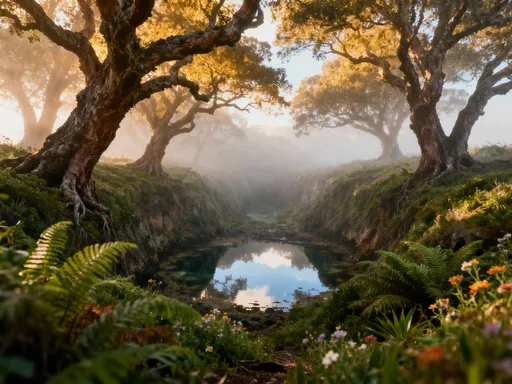
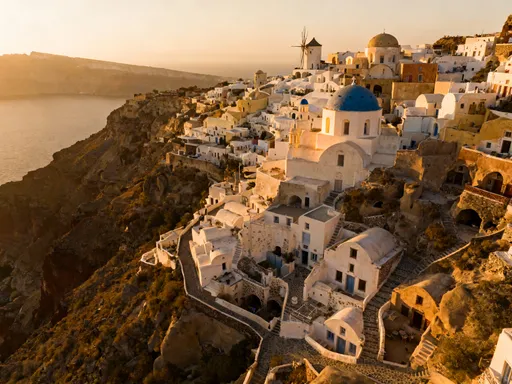
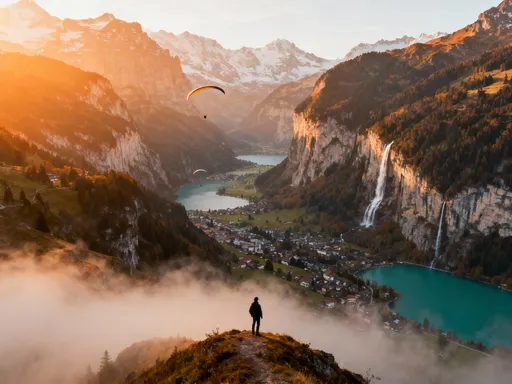
Zakynthos is not simply a Greek island in the Ionian Sea; it is a living canvas, where nature and culture blend in harmonious expression. From the moment you arrive, the island presents itself as a work of art in progress. The cliffs of Navagio Beach rise like sculpted stone against a sky so blue it seems painted. The domes of village churches glow in cobalt and white, echoing the rhythm of the sea. Even the dust on the roads carries a golden tint, as if the earth itself has been brushed with ochre. This visual poetry is not incidental—it shapes the island’s culinary identity. The landscape does not only provide ingredients; it inspires the way they are grown, prepared, and shared.
Walk through any village market, and you’ll see the island’s natural abundance arranged with instinctive artistry. Baskets overflow with figs so ripe they split at the touch, aubergines dark as midnight, and herbs gathered from rocky hillsides—oregano, thyme, and wild fennel—each scent a stroke on the palette of Zakynthian life. Farmers display tomatoes in neat rows, their reds varying from coral to deep garnet, while lemons glisten like drops of captured sunlight. There is no need for elaborate displays; the ingredients speak for themselves, their beauty inherent and unforced. This reverence for natural form translates directly into the kitchen, where freshness is not a trend but a principle.
The rhythm of daily life mirrors the patience of an artist at work. Women sit on stone patios, stringing okra for drying, their hands moving with the ease of long practice. Fishermen mend nets with careful knots, each loop a quiet meditation. Even the way olive branches are pruned in late spring reflects an understanding of balance—between growth and restraint, yield and sustainability. These acts are not seen as chores but as rituals, part of a broader cultural expression where care and craftsmanship define value. In Zakynthos, food begins long before it reaches the table; it starts with the intention behind every seed planted and every branch pruned.
This deep connection between land and expression shapes how visitors experience the island. To walk through a hillside grove of olive trees, their silver leaves shimmering in the breeze, is to understand that the oil pressed from their fruit carries more than flavor—it carries memory. The island’s aesthetic sensibility is not confined to galleries or museums; it is embedded in the soil, the light, the sea air. Zakynthos teaches that beauty is not something separate from life but woven into its most ordinary moments—like the act of peeling a potato or stirring a pot of stew. Here, the culinary is inseparable from the artistic, and both are rooted in a profound respect for nature’s gifts.
Flavors That Tell Stories: The Heart of Zakynthian Cuisine
Zakynthian cuisine is not defined by complexity or extravagance but by continuity. At its core is *mageirika*, the tradition of home cooking passed from one generation to the next, often without written recipes. Instead, knowledge is transmitted through touch, smell, and repetition—grandmother showing granddaughter how to knead dough, mother teaching daughter the exact moment when a stew has absorbed all the right spices. These dishes are more than sustenance; they are edible archives, preserving centuries of history, migration, and resilience. Each bite offers a glimpse into the island’s layered past, shaped by Venetian occupation, Byzantine influence, and its place within the Ionian cultural sphere.
Consider *pastitsada*, a beloved Sunday dish featuring tender beef slow-cooked in a rich tomato sauce spiced with cinnamon, cloves, and bay leaf, then served over thick homemade pasta. Its origins trace back to the Venetian era, when Italian culinary techniques merged with local ingredients and tastes. The result is a dish that balances warmth and depth, sweetness and spice, much like the island itself. Similarly, *solomonopita*—a savory pie whose name references wisdom—combines layers of flaky phyllo with a filling of leeks, dill, and feta, its golden crust cracked like old parchment. These names and methods are not mere labels; they are stories encoded in flavor, inviting those who eat them to become part of the narrative.
Even preservation methods speak of history and ingenuity. Sun-drying tomatoes on stone patios is not just practical; it is a ritual repeated for generations, transforming abundance into sustenance for leaner months. The process is deliberate—slicing each tomato by hand, arranging them in neat rows, covering them with gauze to protect from insects—all steps performed with care, as if preparing an offering. The resulting dried tomatoes, leathery and concentrated in flavor, are stored in olive oil, ready to be revived in stews or salads months later. This practice reflects a deeper philosophy: nothing is wasted, everything has purpose, and time is an essential ingredient.
The emotional resonance of these dishes cannot be overstated. For many families, preparing *pastitsada* or assembling *kreatopita* is an act of love, often reserved for holidays, baptisms, or family reunions. The kitchen becomes a space of connection, where stories are shared as freely as food. Children learn not only how to cook but how to listen, to observe, to wait—skills as vital as any recipe. In a world increasingly dominated by speed and convenience, Zakynthos offers a different rhythm, one where meals are not consumed but experienced, where every dish carries the weight of memory and the promise of continuity.
Artisan Hands: Meeting the Makers Behind the Meals
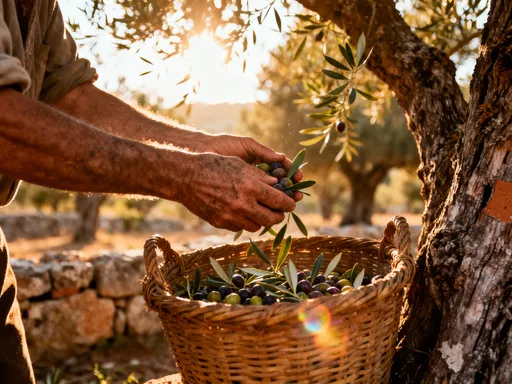
To understand Zakynthos’ culinary artistry, one must meet the people who sustain it. I visited a small olive grove in the eastern hills, where a third-generation producer named Dimitris tends trees that have stood for over a century. His family has pressed oil here since the 1870s, using methods that have changed little over time. As he guided me through the harvest, he spoke not of yield or profit but of memory. “This isn’t industry,” he said, watching the olives tumble into the wooden bin. “It’s memory. Every drop remembers the rain, the wind, the hands that touched it.”
The pressing process itself felt like a ceremony. Olives were crushed in a traditional stone mill, then pressed slowly in a wooden press, extracting oil that flowed thick and green-gold into stainless steel tanks. The first taste was revelatory—grassy, peppery, with a hint of sea salt carried on the breeze. This was not the uniform product found in supermarkets but a living substance, changing slightly from year to year based on weather, soil, and harvest timing. Dimitris does not pasteurize or filter his oil; he believes clarity should come naturally, over time. “Like a good story,” he said, “it needs space to breathe.”
Equally compelling was my visit to a cheesemaker in Exo Chora, a quiet village nestled in the island’s interior. There, I met Eleni, who produces *ladotyri*, a hard, brined cheese aged in olive oil. The process takes months: curds are pressed into molds, soaked in brine, then submerged in oil infused with oregano and bay leaf. The result is a cheese with a deep, tangy flavor and a texture that crumbles like aged parmesan. For Eleni, this is not just food but heritage. “My grandmother taught me,” she said, turning a wheel of cheese with careful hands. “She said the oil protects it, like a mother protects her child.”
These artisans do not see themselves as farmers or producers but as guardians of tradition. Their tools—wooden presses, clay fermentation jars, hand-carved knives—are not relics but active participants in daily work. Many of these methods are labor-intensive and unprofitable by modern standards, yet they persist because they matter. Visitors who come to learn or taste are not treated as customers but as guests, welcomed into a world where time moves differently and quality is measured not in quantity but in care. To witness the making of olive oil or cheese in Zakynthos is to see artistry not as something displayed but as something lived.
The Table as Studio: Dining as a Creative Experience
In Zakynthos, dining is not a transaction but a composition. Meals unfold like exhibitions, each dish chosen and arranged with intention. I experienced this most vividly at a family-run taverna in Keri, perched on a cliff overlooking the sea. The owner, Yiannis, greeted us not with a menu but with a question: “What has the sea given us today?” He then presented a *meze* spread that felt curated—a small plate of *dolmades* (stuffed grape leaves), a bowl of creamy *tzatziki*, grilled octopus drizzled with lemon, and a scattering of capers harvested from the rocky cliffs. “This,” he said, placing a saucer of *sfela* cheese—soft, milky, and slightly sour—“is the bold red in our meal.”
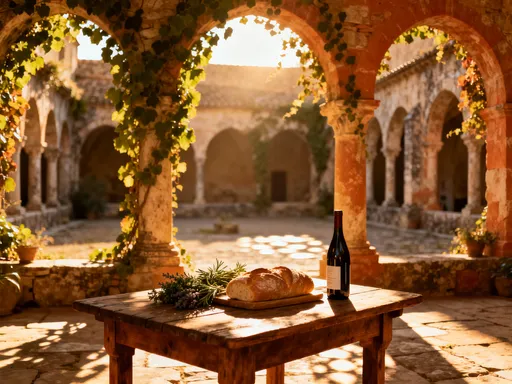
His analogy was not poetic exaggeration. The meal did unfold like a painting, with contrasts of temperature, texture, and flavor creating balance and harmony. The coolness of the yogurt offset the heat of the grilled fish; the saltiness of the feta played against the sweetness of roasted peppers; the crunch of toasted bread gave way to the silkiness of olive oil. Nothing was random. Even the order of serving felt deliberate, moving from light to rich, fresh to fermented. Dining here was not passive consumption but active engagement, a sensory dialogue between guest and host, land and sea.
Plating, too, reflected this artistic sensibility. Food was served on hand-painted ceramics, some made by local potters who blend ancient techniques with contemporary design. One plate featured swirling blue patterns reminiscent of the Aegean; another bore geometric motifs inspired by traditional embroidery. These vessels were not mere containers but extensions of the meal’s meaning, linking food to craft, to place, to history. To eat from a handmade plate in Zakynthos is to participate in a tradition where beauty is not reserved for special occasions but woven into daily life.
This philosophy extends beyond restaurants. In homes, even a simple lunch of bread, cheese, and tomatoes is arranged with care—slices fanned out like petals, herbs scattered like confetti. The table becomes a studio, the cook a composer, arranging flavors as a painter arranges colors. There is no separation between function and form; the practical is also the beautiful. In a world where fast food dominates, Zakynthos offers a different vision—one where eating is not hurried but honored, where every meal is an opportunity to create something meaningful.
Cooking as Collaboration: Joining the Creative Process
One of the most transformative experiences I had in Zakynthos was joining a cooking class in a hillside village. Led by Maria, a retired schoolteacher who now teaches traditional cooking full-time, the class gathered in her stone-walled kitchen, where copper pots hung from the ceiling and sunlight streamed through lace curtains. We were making *kreatopita*, a layered meat pie filled with spiced lamb, onions, and pine nuts, wrapped in hand-rolled phyllo. “This is not about perfection,” Maria said, laughing as I struggled to stretch the dough without tearing it. “Cooking is forgiving, like sketching. You can always add more lines.”
The process was deeply collaborative. We ground spices in a mortar, sautéed onions until they caramelized, and took turns rolling phyllo sheets so thin they were nearly translucent. Each step required attention, patience, and cooperation. There were no electric mixers or pre-made doughs—everything was done by hand, connecting us directly to the ingredients and to one another. As we layered the pie, Maria shared stories of her childhood, of weddings where *kreatopita* was served on silver trays, of winters when the family would gather around the stove and remake the same dishes week after week.
What made the experience so powerful was not just learning a recipe but feeling welcomed into a cultural practice. These classes are not performances for tourists; they are invitations to participate in the island’s creative heartbeat. Visitors leave not only with a printed recipe but with muscle memory—the feel of dough between fingers, the smell of cumin blooming in hot oil, the sound of laughter in a crowded kitchen. They leave with a sense of belonging, having contributed their own brushstroke to Zakynthos’ ongoing culinary story.
Such experiences are increasingly available across the island, often organized through local cultural centers or family-run guesthouses. They are not marketed as luxury experiences but as authentic exchanges, where knowledge flows in both directions. Participants often share their own cooking traditions, creating a quiet dialogue between cultures. In these moments, food becomes more than nourishment; it becomes a bridge, a way of saying, “I see you, I honor your way of life, and I am grateful to be part of it.”
Seasonal Rhythms: How Nature Dictates the Menu
Zakynthos’ cuisine is not static; it breathes with the seasons. Spring arrives with *vlita*, a leafy green similar to amaranth, sautéed with garlic and olive oil and served as a side dish or tucked into pies. Farmers forage it from hillsides, where it grows wild, its tender leaves a sign that winter has passed. As temperatures rise, zucchini flowers appear—delicate, golden blossoms stuffed with cheese and herbs, then lightly fried. These are not gourmet novelties but seasonal staples, available for only a few weeks each year.
Summer is the season of abundance. Tomatoes ripen under the relentless sun, their skins tight and glossy, their flesh sweet and juicy. They are eaten fresh, sliced with salt and oregano, or slow-roasted and preserved in oil. Eggplants swell on the vine, destined for *melitzanosalata* or layered into moussaka. The sea offers its own treasures—octopus, sardines, and red mullet—grilled over charcoal and served with lemon and parsley. Even the timing of meals shifts; lunch is eaten later, dinner later still, to avoid the midday heat.
Autumn brings the grape harvest. In vineyards across the island, families gather to pick *Kontosceli*, a white grape unique to Zakynthos, used to produce both dry and sweet wines. Workers sing as they cut clusters, their voices rising above the rows of vines. The grapes are pressed immediately, their juice fermenting in stainless steel or oak barrels. This is not industrial production but communal effort, often accompanied by shared meals and music. The resulting wine—crisp, floral, with notes of citrus and honey—captures the essence of the season.
Winter slows the pace. Stews like *pastitsada* and *kapama* (a slow-cooked lamb dish with rice and spices) warm the home. Preserved lemons, capers, and sun-dried tomatoes are brought out of storage, adding brightness to otherwise hearty dishes. Even the olive harvest takes place in late autumn and early winter, when the fruit is at its peak. Families work together, spreading nets under trees and shaking branches by hand. The rhythm of life follows the sun, the rain, the turning of the earth. In Zakynthos, cooking is not divorced from nature but aligned with its cycles, a practice of listening and responding, of receiving and giving back.
Beyond the Plate: Where to Experience This Fusion
For visitors seeking to experience this culinary-artistic fusion, the best approach is to move beyond tourist hubs and into the island’s villages. Places like Keri, Volimes, and Anafonitria offer authentic encounters, where tavernas are run by families who source ingredients from their own gardens or neighboring farms. Look for menus that change daily, where dishes are named after the villages they come from, and where owners speak proudly of their olive oil producer or cheese maker. These are not restaurants chasing trends but establishments rooted in place and tradition.
Local festivals, especially in late summer, provide immersive opportunities to taste, see, and hear Zakynthos’ culture. The *Panigiri* celebrations often include communal meals, live music, and craft displays, turning public squares into open-air galleries of food and art. Farmers’ markets in Chora (Zakynthos Town) on Wednesdays and Saturdays are ideal for engaging with producers directly—tasting olives, smelling fresh herbs, watching cheese being sliced to order. These markets are not staged for tourists but function as vital community spaces, where locals gather to trade, socialize, and celebrate the season’s bounty.
For a deeper connection, consider arranging a visit to a working farm or artisan workshop. Many olive oil producers welcome guests during harvest season, offering tours and tastings. Some cheesemakers allow visitors to observe the aging process or even participate in a small way. These experiences are not always advertised online; they are often arranged through word of mouth or local guesthouse recommendations. The key is to approach with respect and curiosity, to say “Good morning” with a smile, and to listen more than you speak. The most meaningful moments in Zakynthos often begin not with a reservation but with a simple human connection.
Conclusion
Zakynthos taught me that cuisine can be art, and art can be sustenance. It is not about elaborate plating or viral dishes; it is about intention, heritage, and the quiet beauty of a tomato grown with care. In a world rushing toward convenience, efficiency, and mass production, this island stands as a quiet counterpoint, reminding us that the most meaningful experiences are handmade, heart-led, and deeply rooted in place. The olive oil pressed from century-old trees, the cheese aged in oil and time, the dough rolled by hands that have done it for decades—these are not commodities but expressions of identity, resilience, and love.
When you taste Zakynthos, you do not just eat; you witness a living masterpiece, one shaped by generations of quiet creativity and deep connection to the land. The island invites us to slow down, to pay attention, to see our meals not just as fuel but as expressions of who we are and what we value. Maybe it is time we all approached our kitchens with the eye of an artist, our tables with the reverence of a gallery, and our ingredients with the gratitude of those who know they are part of something much larger than themselves. In Zakynthos, food is not just life—it is art in motion.