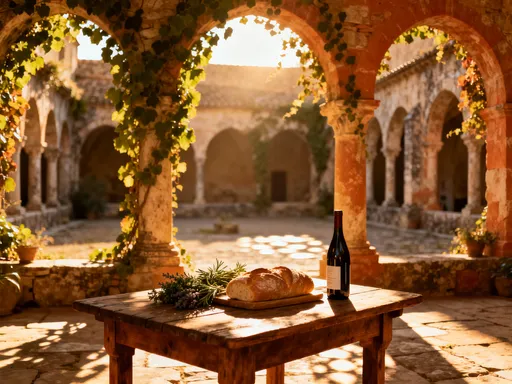
Cairo’s Hidden Architectural Masterpieces You’ve Never Seen
You know what? Cairo isn’t just pyramids and sand—it’s a living gallery of architectural art. I never expected to be so blown away by intricate carvings, forgotten mosques, and Ottoman-era mansions hiding in plain sight. From towering minarets to ancient stone patterns, every corner tells a story. This city blends history, culture, and design in ways that feel almost unreal. Let me take you through the stunning architectural soul of Cairo—where art isn’t just on walls, it is the walls.
The Soul of a City: Why Cairo’s Architecture Tells a Deeper Story
Cairo is not a city frozen in time; it is a dynamic canvas where centuries of human ambition, faith, and artistry have been etched into stone, brick, and wood. While many travelers arrive with visions of the Great Pyramid at Giza, the true depth of Cairo’s identity lies in its layered urban fabric—a blend of Pharaonic echoes, Coptic resilience, Islamic grandeur, Ottoman elegance, and colonial flourishes. Each architectural era did not erase the one before it but instead built upon it, creating a city that feels both ancient and alive. Understanding this architectural evolution transforms a casual visit into a meaningful journey through time.
The city’s buildings are more than shelters or monuments—they are storytellers. A carved stone frieze might reveal the mathematical precision of Islamic geometry, while a weathered wooden door could bear the marks of generations who passed through it. The placement of a window, the height of a courtyard, or the curve of an arch all serve functional and symbolic purposes. For example, the inward focus of traditional homes reflects values of privacy and family, while the towering minarets of mosques call not just to prayer but to reflection. These details invite travelers to slow down and look beyond the surface.
Appreciating architecture enhances travel because it connects us to the lives and beliefs of those who came before. When you stand beneath a vaulted ceiling supported by 700-year-old stonework, you’re not just observing history—you’re experiencing it. This kind of engagement fosters deeper emotional resonance than checking off tourist attractions ever could. It encourages mindfulness, curiosity, and respect. For the thoughtful traveler, especially those who value heritage and craftsmanship, Cairo offers a rare opportunity to witness how design shapes culture and how culture, in turn, shapes design.
Moreover, architectural awareness allows visitors to see the city through a new lens. What might appear as a crumbling facade could be a remnant of 14th-century Mamluk artistry. A narrow alleyway may follow a route established during medieval times. By learning to recognize these elements, one begins to read the city like a book—each building a chapter, each street a sentence in a larger narrative. This kind of travel is not about speed or convenience; it’s about depth, connection, and the quiet joy of discovery.
Islamic Art in Stone: The Mosques That Define Cairo’s Skyline
No element of Cairo’s skyline speaks more powerfully than its mosques. These are not merely places of worship but masterpieces of engineering and aesthetics, where every architectural feature serves both spiritual and artistic purposes. Among the most awe-inspiring is the Sultan Hassan Mosque, completed in 1363. Rising like a fortress of faith, its massive stone walls enclose a cruciform courtyard crowned with a central dome. The scale is staggering, yet the details are exquisite—carved marble panels, inlaid woodwork, and towering iwans (vaulted halls) that draw the eye upward toward the heavens.
One of the most remarkable aspects of Islamic architecture in Cairo is its use of muqarnas—honeycomb-like vaulting that transitions walls into domes. In the Sultan Hassan Mosque, these intricate stone carvings resemble frozen stalactites, dissolving the boundary between structure and ornament. The play of light enhances this effect; as sunlight filters through stained glass windows, it casts kaleidoscopic patterns across marble floors inscribed with verses from the Quran. This deliberate interplay of light, geometry, and calligraphy is not accidental—it is designed to inspire contemplation and humility.
Equally significant is the Al-Rifa’i Mosque, located just across from the Mosque of Sultan Hassan. Though completed much later in the early 20th century, it adheres to classical Islamic forms while incorporating modern construction techniques. Its grand dome and pencil-thin minarets mirror the silhouette of Ottoman imperial mosques, yet its interior is distinctly Egyptian. The marble floors are polished to a mirror finish, reflecting the ornate chandeliers above. The walls are lined with intricate tilework and gilded inscriptions, creating a sense of opulence that still feels reverent.
Preservation efforts in recent decades have helped stabilize these historic structures against pollution, humidity, and urban development. Restoration teams use traditional materials and methods whenever possible, ensuring that repairs remain faithful to the original craftsmanship. For example, artisans trained in stone carving and wood inlay have been brought in to restore damaged sections of minbars (pulpits) and mihrabs (prayer niches). These efforts ensure that future generations can continue to experience these spaces not as museum pieces, but as living, breathing parts of Cairo’s spiritual and cultural life.
Hidden Gems in Old Cairo: Exploring Coptic and Medieval Structures
Just south of the bustling Khan el-Khalili market lies a quieter, older Cairo—one where time seems to move more slowly and history feels palpable. This area, known as Coptic Cairo, is home to some of the city’s most enduring and overlooked architectural treasures. Built within the remains of a Roman fortress, these early Christian structures have survived earthquakes, floods, and centuries of urban change. Among them, the Hanging Church stands out—not for its size, but for its resilience and beauty.
Suspended above a gateway that once formed part of Babylon Fortress, the church’s name comes from its elevated position. Its wooden roof, supported by ancient beams, curves like the hull of a ship—an architectural nod to Noah’s Ark and the journey of faith. Inside, the atmosphere is hushed and intimate. Rows of marble columns support arches adorned with Coptic crosses and floral motifs. The ceiling is painted in deep blues and golds, depicting saints and biblical scenes in a style that blends Egyptian, Greek, and Near Eastern influences. Even the air feels different here—cooler, stiller, as if preserving the silence of centuries.
Nearby, the Church of St. Sergius and Bacchus is believed to be one of the oldest churches in Egypt, possibly dating back to the 4th century. Tradition holds that the Holy Family rested here during their flight into Egypt, giving the site deep spiritual significance. The church’s modest exterior belies its historical importance. Its stone walls, thick and pitted with age, enclose a small sanctuary where flickering oil lamps illuminate frescoes faded by time. The arches are simple yet elegant, their proportions reflecting early Christian architectural principles that prioritized solemnity over spectacle.
What makes these structures so remarkable is not just their age, but their integration into the urban landscape. Unlike modern museums or protected ruins, they are still active places of worship, woven into the daily rhythm of the neighborhood. Women in headscarves light candles, priests chant in ancient liturgical tones, and children play in the courtyards. This continuity—of faith, of community, of architectural endurance—offers a rare and moving experience for visitors. It reminds us that heritage is not something locked behind glass; it can be lived, breathed, and passed down through generations.
Ottoman Elegance: Courtyards, Wind Towers, and Wooden Mashrabiya
Step away from the grand mosques and churches, and you’ll find another dimension of Cairo’s architectural soul: its historic homes. Scattered throughout Islamic Cairo, particularly in districts like Darb al-Ahmar and Sayyida Zainab, are centuries-old residences that once belonged to merchants, scholars, and officials. These houses are not just dwellings—they are poems in wood and stone, designed for comfort, privacy, and beauty. At their heart lies the central courtyard, a quiet oasis where light, air, and water come together in perfect harmony.
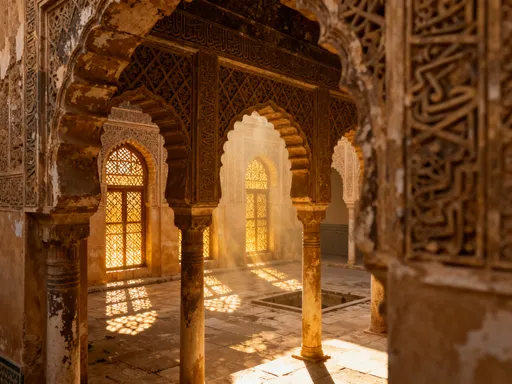
The courtyard is more than a design feature; it is a response to climate and culture. In Cairo’s hot, dusty climate, the open space allows hot air to rise while drawing cooler air from below. Often centered around a fountain or pool, it provides both visual and auditory relief—the gentle splash of water creating a sense of calm. Around it, rooms open onto arched galleries supported by slender columns. The floors are paved with patterned stone or brick, worn smooth by generations of footsteps. This inward focus reflects a cultural value of domestic privacy, shielding family life from the outside world.
One of the most distinctive elements of these homes is the mashrabiya—a latticed wooden screen that covers windows, especially on upper floors. Carved from teak or walnut, these intricate panels allow airflow and light while maintaining modesty. From the inside, they offer filtered views of the street; from the outside, they appear as delicate geometric patterns, glowing like lanterns at sunset. The craftsmanship involved is extraordinary—each piece hand-fitted without nails, using traditional joinery techniques that have been passed down for centuries.
Other features include wind towers, known as malqafs, which capture breezes from above and funnel them into living spaces. Though less common than in Gulf countries, they appear in some older homes, demonstrating an early form of passive cooling. Interior walls are often decorated with stucco carvings—floral motifs, arabesques, and inscriptions—painted in soft earth tones or gilded for special rooms. The scent of aged wood and beeswax lingers in the air, adding to the sensory richness of these spaces.
Today, many of these homes are being restored by preservation organizations and adaptive reuse projects. Some have been converted into guesthouses, cultural centers, or artisan workshops, allowing visitors to experience Ottoman-era living firsthand. These efforts not only protect the buildings but also revitalize the surrounding neighborhoods, supporting local economies and encouraging sustainable tourism.
Colonial Echoes: European-Inspired Buildings in Downtown Cairo
As you move north from Islamic Cairo into the downtown district, the architectural language shifts dramatically. Here, wide boulevards and neoclassical facades evoke 19th-century Paris, a reflection of Egypt’s modernization under Khedive Ismail. Inspired by Haussmann’s redesign of Paris, the ruler sought to transform Cairo into a “Paris on the Nile.” The result was a new urban center blending European elegance with local identity. Streets like Qasr El Nil and Talaat Harb became showcases of eclectic architecture—Art Deco curves, Neo-Moorish arches, and neoclassical columns standing side by side.
The buildings of downtown Cairo tell the story of a city embracing modernity without abandoning its roots. Take the iconic Café Riche, established in 1908. Its wrought-iron balcony and mosaic-tiled facade have hosted writers, revolutionaries, and intellectuals for over a century. The interior, with its mirrored walls and vintage chandeliers, feels like a step back in time. Nearby, the Singer Building—named after the sewing machine company—rises with a sleek, early 20th-century silhouette, its stone carvings blending floral patterns with geometric precision.
What makes this district so fascinating is the dialogue between styles. A building might have a French-style mansard roof but feature Islamic-inspired arches and Arabic inscriptions. Balconies are adorned with ironwork that mimics traditional mashrabiya patterns, merging function with aesthetic homage. Even the street lamps and pavement designs reflect a deliberate effort to create a cohesive, elegant urban environment.
Despite decades of neglect and urban pressure, many of these facades have been preserved, thanks to growing awareness of their historical value. Restoration projects have cleaned soot-covered stone, repaired ironwork, and revived mosaic details. Walking through downtown today, especially in the early morning or late afternoon, offers a cinematic experience—sunlight glinting off brass door knockers, pigeons circling above cornices, and the hum of daily life unfolding beneath century-old balconies. It’s a reminder that Cairo’s identity is not monolithic, but multifaceted—a city that can be both ancient and modern, Eastern and cosmopolitan, all at once.
Street Art Meets Ancient Walls: Modern Expressions in Historic Spaces
In the shadow of minarets and medieval walls, a new form of expression has emerged: street art. Nowhere is this more visible than on Mohamed Mahmoud Street, just off Tahrir Square. Once an ordinary alley, it became a canvas for political and social commentary during the 2011 uprising. Murals depicting martyrs, symbols of resistance, and calls for justice now cover the walls, transforming the space into an open-air gallery. While some view this as vandalism, others see it as a continuation of Cairo’s long tradition of using walls to tell stories.
The contrast is striking—ancient stone juxtaposed with bold spray paint, Quranic inscriptions near portraits of revolutionaries. This tension has sparked debate among historians, artists, and residents. Can graffiti coexist with heritage? The answer is not simple. On one hand, unregulated painting can damage historic surfaces and obscure architectural details. On the other, art can breathe new life into neglected areas and give voice to contemporary concerns. In some cases, murals have been carefully applied over protective layers or on modern walls adjacent to ancient ones, showing that thoughtful integration is possible.
There are also examples where street art enhances rather than disrupts. In certain neighborhoods, artists have collaborated with preservation groups to create murals that celebrate Cairo’s architectural history—paintings of minarets, geometric patterns, or historic figures that blend seamlessly with their surroundings. These works do not deface; they dialogue. They invite passersby to look up, pause, and reflect—not just on the present, but on the layers of time that define the city.
For the traveler, this fusion of old and new offers a dynamic way to engage with Cairo. It shows that heritage is not static—it evolves, responds, and remains relevant. By visiting these spaces with respect and curiosity, one can appreciate both the permanence of stone and the immediacy of paint, understanding that a city’s soul is shaped not only by its past but by its present.
How to See Cairo Like an Architect: A Traveler’s Guide to Meaningful Exploration
To truly appreciate Cairo’s architecture, you must shift your perspective—from seeing buildings as backdrops to recognizing them as protagonists in the city’s story. Begin by slowing down. Instead of rushing from one landmark to the next, choose a single neighborhood and explore it on foot. Islamic Cairo, Coptic Cairo, or downtown—each offers a distinct architectural language. Walk early in the morning when the light is soft and the streets are quiet. This is when shadows stretch long across stone carvings, and the details emerge with clarity.
Consider joining a guided walking tour led by an architect, historian, or preservationist. These experts can point out features you might otherwise miss—a hidden inscription, a rare construction technique, or the significance of a particular arch style. Many tours now focus specifically on design, offering insights into materials, climate adaptation, and cultural symbolism. Some even include visits to restoration workshops, where you can see traditional craftspeople at work.
For photography, aim for golden hour—just after sunrise or before sunset—when the warm light enhances textures and colors. Look for reflections in puddles, patterns in shadows, and the interplay between old and new. But always be respectful: ask permission before photographing people, and avoid using flash inside religious or private spaces. Remember, many of these buildings are not ruins—they are lived-in, sacred, and deeply valued by locals.
When exploring, support ethical tourism practices. Choose locally run guesthouses or cafes, buy crafts directly from artisans, and avoid touching or climbing on historic structures. Engage with the community—chat with shopkeepers, listen to stories, and show genuine interest. This kind of travel fosters mutual respect and ensures that your presence contributes positively to the neighborhoods you visit.
Finally, allow time for reflection. Sit in a courtyard, sip mint tea, and simply observe. Let the details sink in—the curve of a dome, the rhythm of a column, the way light moves across a wall. These moments of stillness often lead to the deepest connections. By approaching Cairo with patience, curiosity, and reverence, you don’t just see its architecture—you feel it.
Cairo’s architecture is more than stone and mortar—it’s a testament to human creativity across millennia. By learning to see its buildings as art, travelers gain deeper connection and wonder. Let this city inspire you to look closer, stay longer, and feel the genius in every arch and archway.